Safety in lumbar puncture, nursing care before and after cerebrospinal fluid collection
DOI:
https://doi.org/10.33448/rsd-v14i11.50125Keywords:
Cerebrospinal Fluid, Lumbar Puncture, Nursing Care, Patient Safety.Abstract
Cerebrospinal Fluid (CSF) is an essential fluid for the protection and homeostasis of the central nervous system. During a lumbar puncture, a sample of this fluid is withdrawn for examination, which is highly relevant for the diagnosis of various pathologies. This article aims to investigate the safety of lumbar puncture in patients requiring the examination and the nursing care required before, during, and after CSF collection. This is a literature review conducted between August 15 and November 12, 2025, using databases such as Guyton, ANVISA, the Ministry of Health, SciELO, and various scientifically proven articles. Nineteen studies, in Portuguese and English, addressing the topic were included. The results showed that the main nursing care considerations relate to the proper preparation and positioning of the patient, and the importance of good aseptic practices before, during, and after the procedure. 70% of the examinations performed were uneventful. We emphasize that continuing education and the standardization of care protocols reduce risks and lead to improvements in the quality of care. Therefore, the role of nursing is to be one of the pillars that ensure patient safety.
References
Agência Nacional de Vigilância Sanitária. (2018). Resolução RDC nº 222, de 28 de março de 2018. Brasília, DF: ANVISA.
Argenta, C., Silva, M. B., Bavaresco, T., Almeida, M. A., & Lucena, A. F. (2022). Processo de Enfermagem: da teoria à prática em cuidados intensivos. SciELO Livros. https://books.scielo.org/id/6z3tw/pdf/argenta-9786586545708-01.pdf
Atas de Ciências da Saúde. (2016). Análise do líquido cefalorraquidiano: revisão de literatura (A. A. Leite, S. R. Honório, G. R. Torres, & P. R. Errante). São Paulo.
Brasil. Ministério da Saúde. (2019). Protocolo de coleta e análise do líquido cefalorraquidiano. Brasília, DF: Ministério da Saúde.
Brasil. Ministério da Saúde. (2022). Manual de procedimentos para punção lombar. Brasília, DF: Ministério da Saúde.
BRASIL. Ministério da Saúde. Manual de procedimentos para punção lombar. Brasília: Ms, 2022.
Brasil. Ministério da Saúde. Secretaria de Vigilância em Saúde e Ambiente. Departamento do Programa Nacional de Imunizações. Coordenação-Geral de Vigilância das Doenças Imunopreveníveis. (2024, outubro). Informe: Meningites. Brasília, DF: Ministério da Saúde.
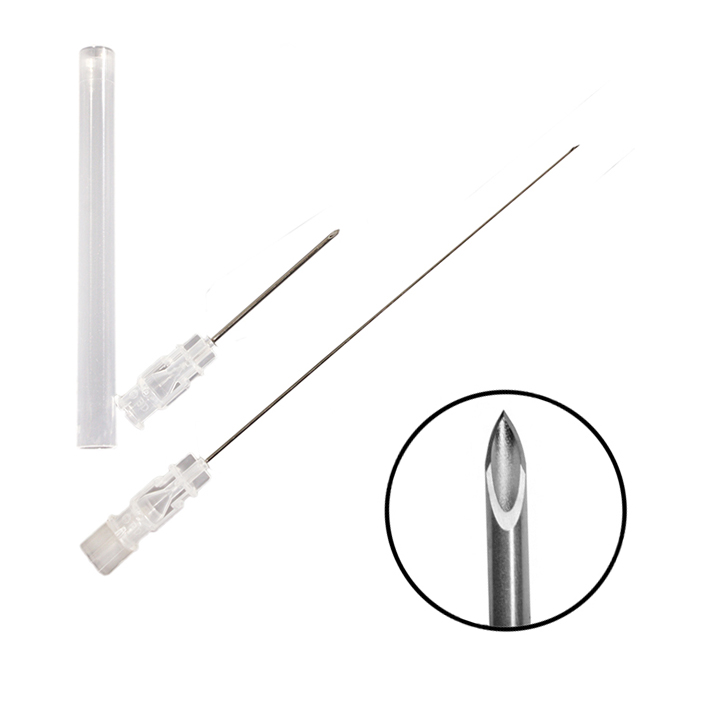
Cbsmed. (2022). Imagem 002524. Website Cbsmed. https://cbsmed.com.br/wp-content/uploads/2022/11/002524.jpg.
Evans, R. W., Armon, C., Frohman, E. M., & Goodin, D. S. (2021). Assessment: Prevention of post–lumbar puncture headaches. Neurology, 73(11), 885–892.
Ghaleb, A. (2022). Postdural puncture headache: Updated review. Anesthesiology Research and Practice, 2022, 102967. https://doi.org/10.1155/2022/102967
Guyton, A. C., & Hall, J. E. (2022). Tratado de fisiologia médica (15ª ed.). Rio de Janeiro: Elsevier.
Kumar, V., Abbas, A. K., & Aster, J. C. (2021). Robbins & Cotran: Patologia – bases patológicas das doenças (11ª ed.). Rio de Janeiro: Elsevier.
Kasvi. (2025). Líquido Cefalorraquidiano: fatores pré-analíticos que influenciam sua análise. Imagem no website Kasvi. https://kasvi.com.br/liquido-cefalorraquidiano-fatores-pre-analiticos-analise/
Lima, M. C., Oliveira, J. S., & Santos, F. R. (2023). Biosegurança na coleta de líquor: revisão integrativa. Revista Latino-
Americana de Enfermagem, 31, e3792. https://doi.org/10.1590/1518-8345.0000.3792
Moura, R. L., & Almeida, C. S. (2023). Complicações relacionadas à punção lombar: revisão integrativa. Revista Brasileira de Enfermagem, 76(3), 455–462.
Oliveira, M. P., & Santos, A. F. (2022). A atuação do enfermeiro no preparo e acompanhamento do paciente durante a punção lombar. Revista de Enfermagem Contemporânea, 12(1), 102–110.
Pereira, A. S. et al. (2018). Metodologia da pesquisa científica. [free ebook]. Santa Maria. Editora da UFSM.
Silva, R. M., Costa, L. E. L., Almeida, A. R. L. P. A., Batista, A. C. S. B., & Silva, T. P. C. C. (2023). Consulta de enfermagem à criança com deficiência e doenças raras. SciELO Livros. https://books.scielo.org/id/y69j9/pdf/costa-9786556308814-05.pdf
Silva, T. R., Costa, J. M., & Ferreira, L. P. (2023). Assistência de enfermagem e complicações pós-punção lombar. Revista Ciência & Saúde, 9(2), 213–221.
Snyder, H. (2019). Literature review as a reSearch methodology: An overview and guidelines. Journal of Business Research. 104, 333-9. Doi: https://doi.org/10.1016/j.jbusres.2019.07.039.
Sociedade Brasileira de Patologia Clínica / Medicina Laboratorial. (2018). Fatores pré-analíticos e interferentes em ensaios laboratoriais: análise dos valores de referência do líquido cefalorraquidiano. São Paulo: SBPC/ML.
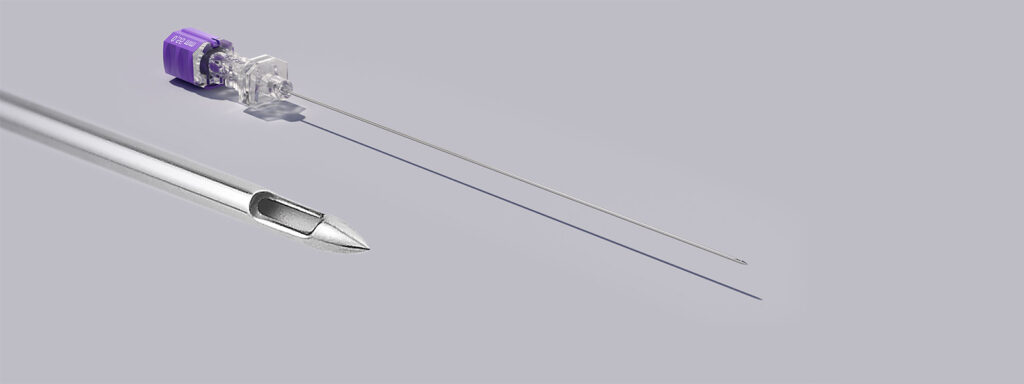
Sonikamx. (2021). Imagem SPROTTE_PAJUNK. Website Sonikamx.
https://www.sonikamx.com/wp-content/uploads/2021/03/SPROTTE_PAJUNK-1024x384.jpeg
Souza, D. A., & Lima, E. C. (2021). A importância da capacitação profissional na realização de procedimentos invasivos. Journal of Nursing and Health, 11(4), 580–589.
Tortora, G. J., & Derrickson, B. (2021). Princípios de anatomia e fisiologia (16ª ed.). Rio de Janeiro: Guanabara Koogan.
Downloads
Published
Issue
Section
License
Copyright (c) 2025 Maria Alice Barbosa Serique, Anaiele de Oliveira Ferreira, Cristine Martins Rojas, Jorge Duarte de Souza, Mayara Pereira Garcia, Raiandra Paula Rodrigues da Silva, Shelry Lais Duarte da Silva

This work is licensed under a Creative Commons Attribution 4.0 International License.
Authors who publish with this journal agree to the following terms:
1) Authors retain copyright and grant the journal right of first publication with the work simultaneously licensed under a Creative Commons Attribution License that allows others to share the work with an acknowledgement of the work's authorship and initial publication in this journal.
2) Authors are able to enter into separate, additional contractual arrangements for the non-exclusive distribution of the journal's published version of the work (e.g., post it to an institutional repository or publish it in a book), with an acknowledgement of its initial publication in this journal.
3) Authors are permitted and encouraged to post their work online (e.g., in institutional repositories or on their website) prior to and during the submission process, as it can lead to productive exchanges, as well as earlier and greater citation of published work.